
Setting up a company is not only a business move—it can also be a legal pathway to stay in Vietnam long-term. If you’re exploring a company formation visa, this guide explains how business registration connects with visa options, what actually works in practice, and how to structure it correctly.
1. What Is a “Company Formation Visa”?
A company formation visa is not an official visa category under Vietnamese law. Instead, it refers to a strategy where foreigners:
- Establish a company in Vietnam
- Use that company to sponsor their visa or residence
👉 In reality, this involves combining:
- Business registration (IRC + ERC)
- Immigration pathways (DN visa, TRC, or investor visa)
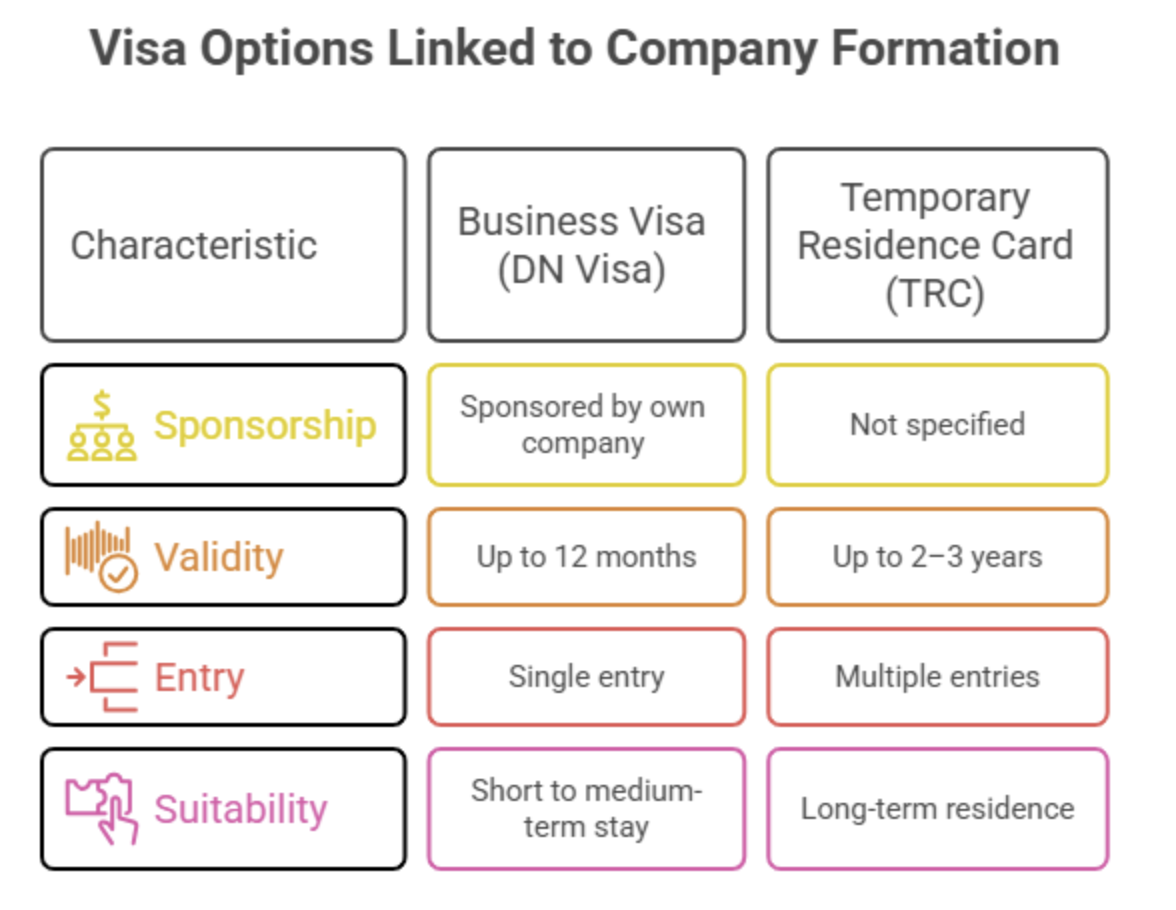
2. Visa Options Linked to Company Formation
3. Investor Visa (DT1 – DT4)
This is the strongest option tied to company formation.
| Type | Investment Amount | Duration |
| DT1 | ≥ VND 100 billion | Up to 10 years |
| DT2 | ≥ VND 50 billion | Up to 5 years |
| DT3 | ≥ VND 3 billion | Up to 3 years |
| DT4 | < VND 3 billion | Up to 12 months |
👉 Most foreign SMEs fall into DT3 or DT4 categories
3. How Company Formation Connects to Your Visa
The relationship is straightforward but often misunderstood:
Step 1: Register your company (IRC + ERC)
Step 2: Become legal representative / investor
Step 3: Use company documents to sponsor your visa
👉 Your visa status depends on:
- Your role (owner, director, employee)
- Investment capital
- Business activity
4. The Legal Process (Simplified Flow)
Phase 1 – Company Formation
- Apply for Investment Registration Certificate (IRC)
- Apply for Enterprise Registration Certificate (ERC)
Phase 2 – Immigration Application
- Apply for visa (DN / DT)
- Convert to TRC (if eligible)
Phase 3 – Compliance Maintenance
- Maintain active company
- File taxes and reports
- Keep business legally operational
⚠️ If your company becomes inactive → your visa may be affected.
5. Key Requirements to Qualify
To successfully use company formation for a visa, you must:
- Hold a valid passport
- Establish a legally registered company
- Contribute charter capital properly
- Maintain a real business address
- Comply with tax and reporting obligations
👉 Authorities increasingly check substance over form (real business vs. “paper company”).
6. Timeline: From Company Setup to Visa
| Stage | Time |
| Company formation (IRC + ERC) | 3–6 weeks |
| Visa application (DN / DT) | 5–7 working days |
| TRC issuance | 5–7 working days |
👉 Total estimated timeline: 4–8 weeks
7. Costs Involved
Costs vary depending on complexity, but generally include:
- Company formation service fees
- Government licensing fees
- Visa / TRC fees
- Office lease & compliance costs
💰 Estimated range: $1,500 – $5,000+
8. Common Mistakes (Critical Insights)
- ❌ Setting up a company only for visa purposes (high risk)
- ❌ Declaring low capital but applying for investor visa
- ❌ Not maintaining accounting & tax compliance
- ❌ Using fake or non-compliant office address
👉 These are the main reasons applications get rejected or flagged.
9. Is This Strategy Right for You?
A company formation visa strategy works best if you:
- Plan to stay long-term in Vietnam
- Want business + residency combined
- Are willing to maintain legal compliance
It is not suitable if you:
- Only need a short tourist stay
- Do not intend to operate a real business
FAQ Section (SEO Optimization)
Can I get a visa just by opening a company in Vietnam?
Not automatically. You must apply for the appropriate visa (DN, DT, or TRC) based on your company.
What is the easiest visa through company formation?
The DN visa is the most accessible, but the DT visa or TRC offers longer-term benefits.
How much do I need to invest to get an investor visa?
Typically from VND 3 billion (~$120,000) for DT3 visa.
Can I stay in Vietnam long-term with this strategy?
Yes, if your company remains active and compliant.
Conclusion
The concept of a company formation visa is not about a single document—it’s about structuring your business and immigration status correctly.
Done right, it gives you:
- Legal long-term residence
- Business ownership in a growing economy
- Flexibility to expand in Southeast Asia
Done wrong, it leads to:
- Visa rejection
- Compliance risks
- Financial loss