For multicultural families (where one parent is a foreigner), choosing nationality for a newborn is a critical decision that directly impacts the child’s future rights and obligations.
Should you choose Vietnamese nationality, foreign nationality, or aim for both? This article analyzes the legal and practical aspects to provide parents with a comprehensive overview.
1. Benefits of Choosing Vietnamese Nationality
Holding Vietnamese citizenship grants the child full rights that are restricted for foreigners:
- Real Estate Ownership: This is the most significant advantage. Vietnamese citizens can own land plots and landed properties indefinitely (freehold). Conversely, foreigners are restricted to owning condos/houses within commercial projects for a maximum of 50 years.
- Education & Healthcare: The child is eligible for the public education system and public tuition rates. Medical costs at public hospitals also follow the pricing structure for domestic citizens rather than international rates.
- Administrative Ease: No need for visas, temporary residence cards (TRC), or visa renewals to enter or reside in Vietnam.
2. Procedure: Agreement on Nationality Selection
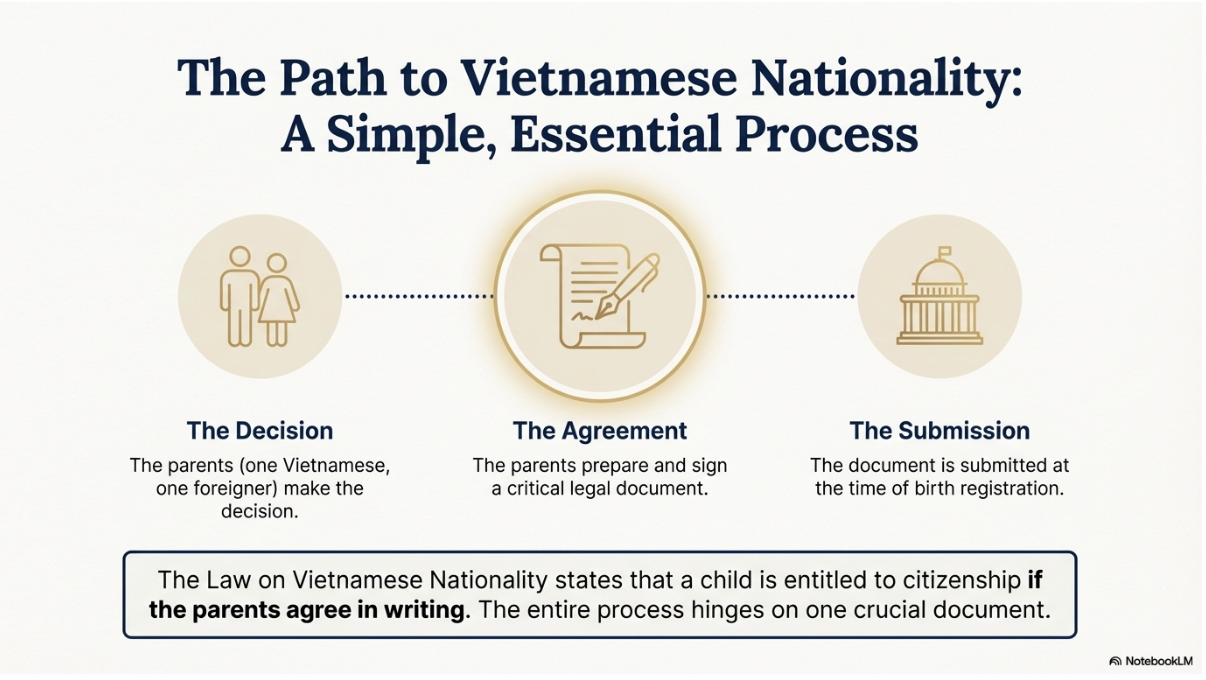
Under the Law on Vietnamese Nationality, a child born to a Vietnamese parent and a foreign parent is entitled to Vietnamese nationality if the parents agree in writing.
- Timing: This must be done at the time of birth registration at the District-level People’s Committee or Department of Justice.
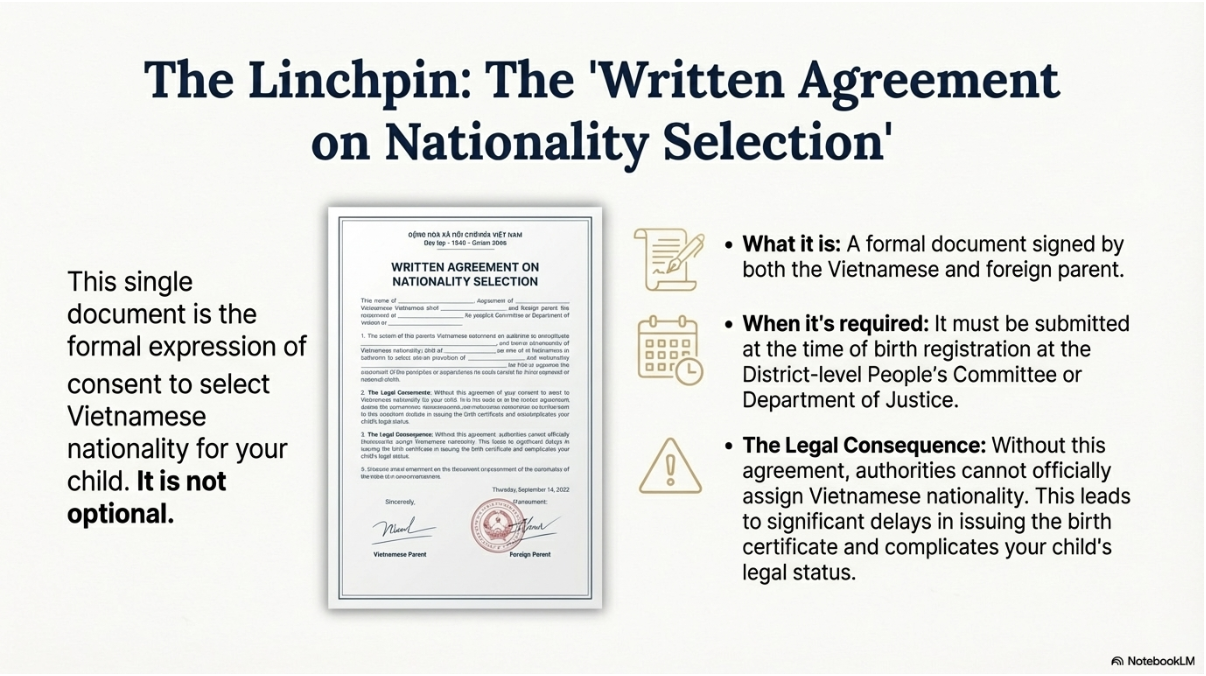
- Required Document: A “Written Agreement on Nationality Selection.” This document must be signed by both parents, confirming their consent to select Vietnamese nationality for the child.
- Legal Consequence: Without this written agreement, authorities cannot officially assign Vietnamese nationality to the child, leading to delays in issuing the birth certificate.
3. The “Dual Citizenship” Question: Can the Child Hold Two Passports?
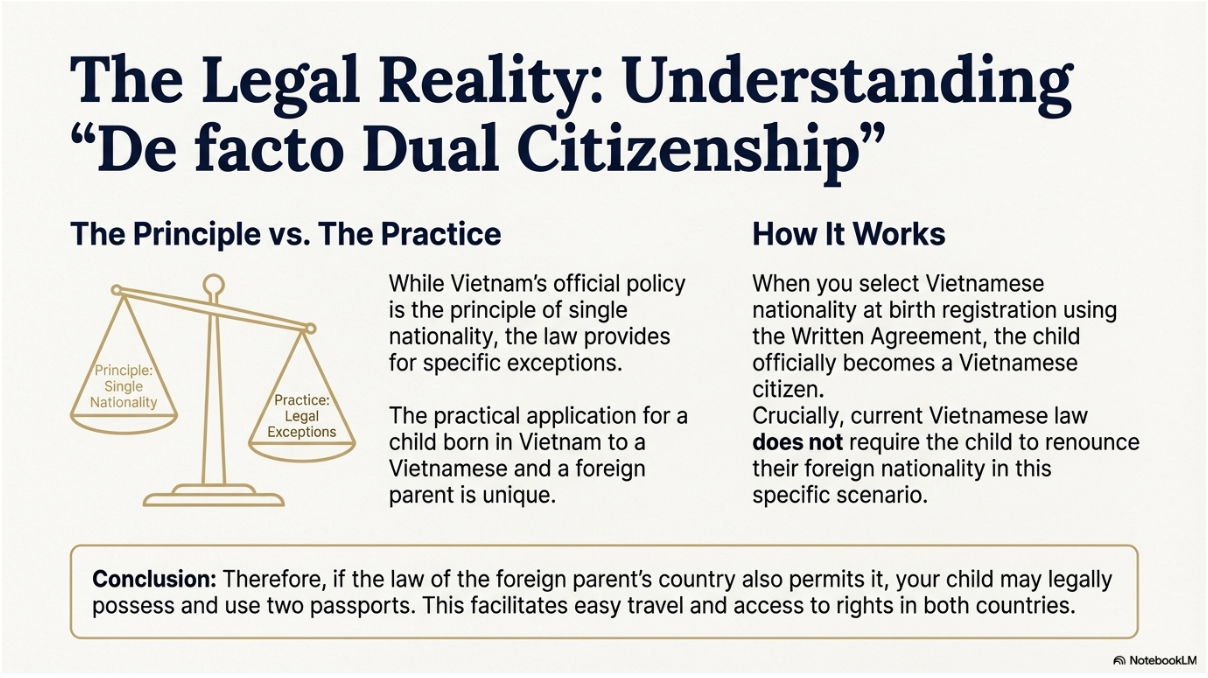
This is the most frequently asked question. While Vietnam generally follows the principle of single nationality, the law allows for specific exceptions.
- Practical Application: For children born in Vietnam to mixed-nationality parents, if the parents select Vietnamese nationality upon birth registration, the child officially becomes a Vietnamese citizen.
- Holding a Foreign Passport: Current Vietnamese law does not explicitly require the child to renounce the foreign nationality in this specific birth registration scenario (unlike adults applying for naturalization). Therefore, if the laws of the foreign parent’s country permit, the child may legally possess and use two passports (De facto Dual Citizenship), facilitating easy travel between both countries.
Need Legal Advice on Nationality and Civil Status?
Choosing a nationality is a long-term legal strategy. If you need assistance with drafting the Nationality Selection Agreement or advice on maintaining dual passport benefits for your child, please contact us:
📞 Contact DHH Law Firm Today
🏢 Main Office: 2nd Floor, 829 Huynh Tan Phat Street, Phu Thuan Ward, Ho Chi Minh City, Vietnam
📞 Hotline:
+84 89 9352 777 (Vietnamese)
+84 89 9351 777 (English)
🌐 Website: www.dhhlawfirm.vn
📧 Email: contact@dhhlawfirm.vn
✨ DHH Law Firm – Your trusted legal partner for family and foreign-related civil procedures in Vietnam.