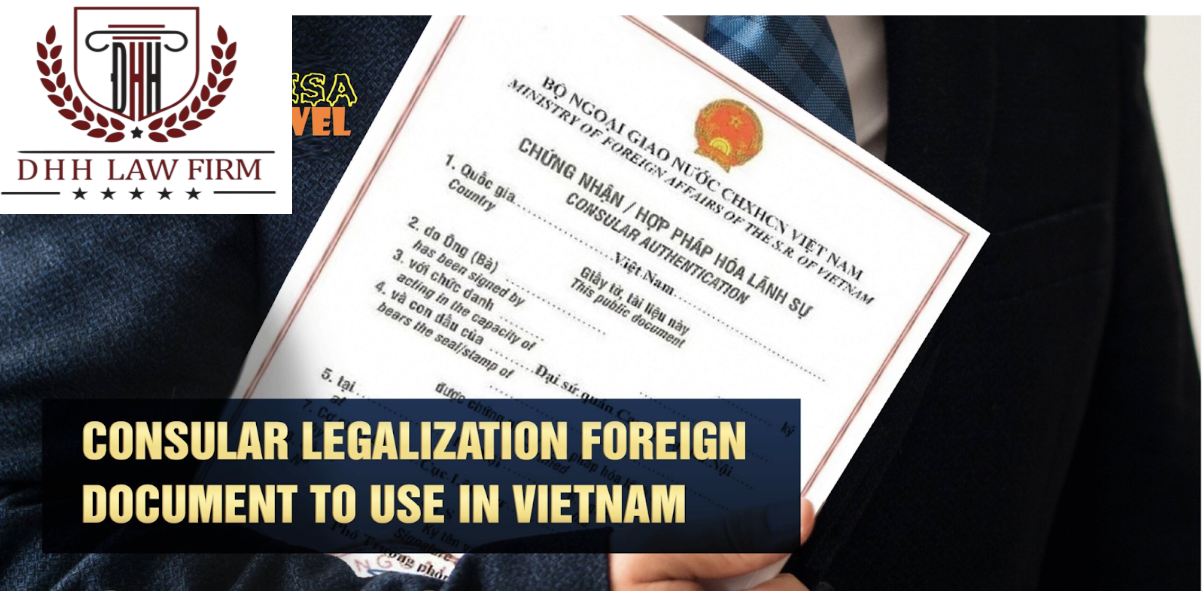
When using foreign documents in Vietnam — or Vietnamese documents abroad — consular legalization is often mandatory.
Many foreigners misunderstand this procedure and assume notarization or translation is sufficient. In reality, improper legalization is one of the most common reasons for rejection in:
- Work permit applications
- Investment licensing
- Marriage registration
- Company establishment
- Overseas immigration procedures
This guide explains the legal framework, step-by-step procedures, and common risks involved in consular legalization in Vietnam.
1. What Is Consular Legalization?
Consular legalization is a certification process confirming that:
- A document issued in one country is legally valid
- The signature, seal, and title on the document are authentic
- The document can be recognized by authorities in another country
Legalization does not certify the content — only the authenticity of the issuing authority.
2. When Is Consular Legalization Required?
2.1 Foreign Documents Used in Vietnam
Foreign-issued documents must be legalized before being used in Vietnam for:
- Work permit application
- Criminal record submission
- Degree recognition
- Investment registration
- Marriage with Vietnamese citizen
- Court procedures
Example documents:
- University degree
- Criminal record certificate
- Birth certificate
- Marriage certificate
- Corporate documents
2.2 Vietnamese Documents Used Abroad
Vietnam-issued documents must be legalized before being used overseas for:
- Immigration applications
- Overseas employment
- Foreign court proceedings
- International business transactions
3. Apostille vs. Consular Legalization
Many foreigners confuse these two systems.
Apostille: Used between countries that are members of the Hague Apostille Convention.
Consular Legalization
Used when at least one of the countries is not a Hague member.
Vietnam currently requires consular legalization for most foreign documents unless exempted by treaty.
Always verify which system applies before proceeding.
4. Step-by-Step Procedure for Foreign Documents Used in Vietnam
The process typically involves 4 stages:
Step 1: Notarization in Issuing Country
Document must be notarized by a competent authority.
Step 2: Authentication by Foreign Affairs Authority
Authenticated by:
- Ministry of Foreign Affairs
- Secretary of State (depending on country)
Step 3: Legalization by Vietnamese Embassy/Consulate
Vietnamese diplomatic mission in issuing country legalizes the document.
Step 4: Translation & Notarization in Vietnam
After arrival in Vietnam:
- Translate into Vietnamese
- Notarized translation
Only after completing all steps is the document legally valid for use.
5. Legalization of Vietnamese Documents for Overseas Use
The procedure includes:
- Notarization or certification in Vietnam
- Authentication by the Ministry of Foreign Affairs of Vietnam
- Legalization by the foreign embassy or consulate in Vietnam
Processing time depends on:
- Destination country
- Type of document
6. Common Documents Requiring Legalization
For Work Permit
- University degree
- Criminal record
- Experience confirmation
For Investment
- Certificate of incorporation
- Financial statements
- Board resolutions
For Marriage
- Certificate of single status
- Birth certificate
For Immigration Abroad
- Vietnamese police clearance
- Marriage certificate
- Academic transcripts
7. Processing Time
Typical timeline:
| Stage | Estimated Time |
| Foreign notarization & authentication | 3–10 working days |
| Vietnamese consular legalization abroad | 3–7 working days |
| Translation & notarization in Vietnam | 1–3 working days |
Total estimated time: 2–4 weeks (depending on country).
Urgent cases may require special arrangements.
8. Validity Period
Vietnamese authorities typically accept legalized documents issued within:
- 6 months (for criminal records)
- 12 months (for health certificates)
Always confirm with the receiving authority.
9. Common Mistakes Leading to Rejection
9.1 Skipping Embassy Legalization
Authentication by foreign ministry alone is insufficient.
9.2 Incorrect Document Format
Some countries issue electronic documents not accepted for legalization.
9.3 Name Mismatch
Passport name must match legalized document exactly.
9.4 Late Legalization
Documents may expire during processing.
9.5 Improper Translation
Translation must be notarized by licensed entity in Vietnam.
10. Exemptions from Legalization
Legalization may not be required if:
- Bilateral treaties provide exemption
- Documents are exchanged between diplomatic missions
- Certain simplified administrative procedures apply
However, exemptions are limited and must be confirmed case-by-case.
11. Consular Legalization for Work Permit Applications
For foreign professionals applying for a work permit in Vietnam, legalized documents are mandatory for:
- Degree certificates
- Criminal records
- Experience letters
Failure to legalize properly will result in work permit rejection.
Because work permits have strict deadlines, legalization timing must be carefully managed.
12. Remote Legalization: Can It Be Done?
Yes, through:
- Authorized representative
- Courier submission
- Power of attorney
However, some embassies require personal appearance.
13. Legal Risks of Improper Legalization
Improperly legalized documents may lead to:
- Rejection of work permit
- Delay in investment licensing
- Marriage registration refusal
- Immigration application denial
In some cases, submitting improperly legalized documents may trigger administrative penalties.
14. Why Legal Assistance Is Recommended
Consular legalization often involves:
- Multiple authorities across two countries
- Strict formatting requirements
- Tight immigration deadlines
- Coordination between embassies and ministries
Legal professionals can:
- Verify document eligibility
- Coordinate multi-country processing
- Arrange urgent legalization
- Ensure compliance with work permit or investment requirements
Professional support reduces risk of rejection and saves significant time.
Frequently Asked Questions (FAQ)
Q1: Is notarization enough for Vietnam?
No. Consular legalization is usually required.
Q2: Can I use an Apostille document in Vietnam?
Depends on treaty applicability. Verification is required.
Q3: How long does legalization take?
Typically 2–4 weeks.
Q4: Can a lawyer handle everything on my behalf?
Yes, subject to proper authorization.
Conclusion
Consular legalization is a mandatory legal process for cross-border document use involving Vietnam. Whether applying for a work permit, registering an investment, or preparing for overseas immigration, proper legalization ensures your documents are recognized by authorities.
Failure to comply with legalization requirements can delay or invalidate your application.
Call to Action
If you need assistance with consular legalization in Vietnam or abroad, our legal team provides:
- End-to-end legalization coordination
- Embassy liaison support
- Urgent processing assistance
- Integrated support with work permit, investment, or marriage procedures
📞 Contact DHH Law Firm Today
🏢 Main Office: 2nd Floor, 829 Huynh Tan Phat Street, Phu Thuan Ward, Ho Chi Minh City, Vietnam
📞 Hotline:
- +84 89 9352 777 (Vietnamese)
- +84 89 9351 777 (English)
🌐 Website: www.dhhlawfirm.vn
📧 Email: contact@dhhlawfirm.vn
✨ DHH Law Firm – Your trusted legal partner for family and foreign-related civil procedures in Vietnam.