The dissolution of marriage is a complex legal proceeding, and doing so within a foreign jurisdiction adds significant layers of procedural intricacy. For expatriates and foreign nationals, a comprehensive understanding of the divorce procedure in Vietnam is essential to safeguard legal rights, particularly regarding asset division and child custody.
This legal guide outlines the statutory jurisdiction, procedural classifications, and the principles governing divorce cases involving “foreign elements” under the Law on Marriage and Family 2014 and the Civil Procedure Code 2015.
1. Jurisdiction: Competence of the Court
A frequent procedural error in divorces involving expatriates is filing the petition at an incorrect judicial level.
The “Foreign Element” Determination
Under the Civil Procedure Code 2015, a divorce case is deemed to involve “foreign elements” if:
- At least one party is a foreign national or an overseas Vietnamese.
- The parties are Vietnamese citizens, but the grounds for establishing, changing, or terminating the marriage occurred abroad.
- The assets or involved parties are located abroad.
Competent Authority
Cases involving foreign elements generally do not fall under the jurisdiction of the standard District Courts.
- General Rule: The petition must be filed at the Provincial-level People’s Court where the defendant resides.
- Statutory Exception: The District-level People’s Court may retain jurisdiction solely if the divorce is between a Vietnamese citizen and a citizen of a neighboring country residing in a border area.
2. Mutual Consent vs. Unilateral Divorce
Vietnamese law legally distinguishes between two forms of divorce, which fundamentally dictates the procedural timeline and complexity.
Mutual Consent Divorce
This occurs when both spouses voluntarily agree to the divorce and have reached a consensus on all ancillary issues, including property division and child custody.
- Legal Classification: Processed as a “Civil Matter” .
- Court’s Role: The Court focuses on verifying the voluntariness of the consent and ensuring the agreement safeguards the legitimate interests of the wife and children.
- Timeline: The statutory preparation time for considering the application is generally 01 month.
Unilateral Divorce
This occurs when one spouse files for divorce against the other’s will, or when the parties cannot reach an agreement regarding custody or assets.
- Legal Grounds: The Court grants divorce only upon proof of domestic violence or serious violations of spousal rights/obligations (e.g., adultery, abandonment) that cause the marriage to fall into a critical state where common life is impossible.
- Legal Classification: Processed as a “Civil Case”, involving mandatory mediation and trial procedures.
- Timeline: The statutory preparation time for trial is generally 04 months, subject to extension for complex cases involving foreign assets or absentee parties.
3. Asset Division in Divorce (Vietnam)
In the absence of a pre-nuptial agreement (within the statutory property regime), if parties cannot negotiate a settlement, the Court adjudicates the asset division pursuant to Article 59 of the Law on Marriage and Family.
The Principle of Equity

The general legal principle is that common property is divided equally (50/50). However, the Court exercises discretion to adjust this ratio based on the following statutory factors:
- Family Circumstances: The financial status and living conditions of the husband and wife.
- Contribution: The effort of each party in creating, maintaining, and developing the common property.
- Legal Note: Housework and family care are legally recognized as “labor with income.”
- Legitimate Interests: Protecting the interests of each party in production, business, and professional practice to ensure income generation post-divorce.
- Fault: The fault of each party in violating spousal rights and obligations leading to the divorce.
Handling Real Estate with Foreign Elements
A critical issue arises regarding real estate, as foreign nationals are generally restricted from holding title to certain land usage rights in Vietnam.
- Division by Value: Since division “in kind” (physical division) is often legally impossible for foreigners regarding land rights, the Court typically allocates the physical property to the Vietnamese spouse (if applicable).
- Financial Compensation: The party receiving the physical asset is ordered to pay the foreign spouse their proportionate share of the property’s value in cash.
4. Child Custody under Vietnam Law
Custody disputes are resolved based on the paramount principle of the “Best Interests of the Child.”
- Priority on Agreement: The Court respects the agreement between parents regarding direct custody and child support, provided it does not harm the child’s welfare.
- Adjudication: If no agreement is reached, the Court assigns custody to the parent best capable of providing for the child’s physical, spiritual, and moral development.
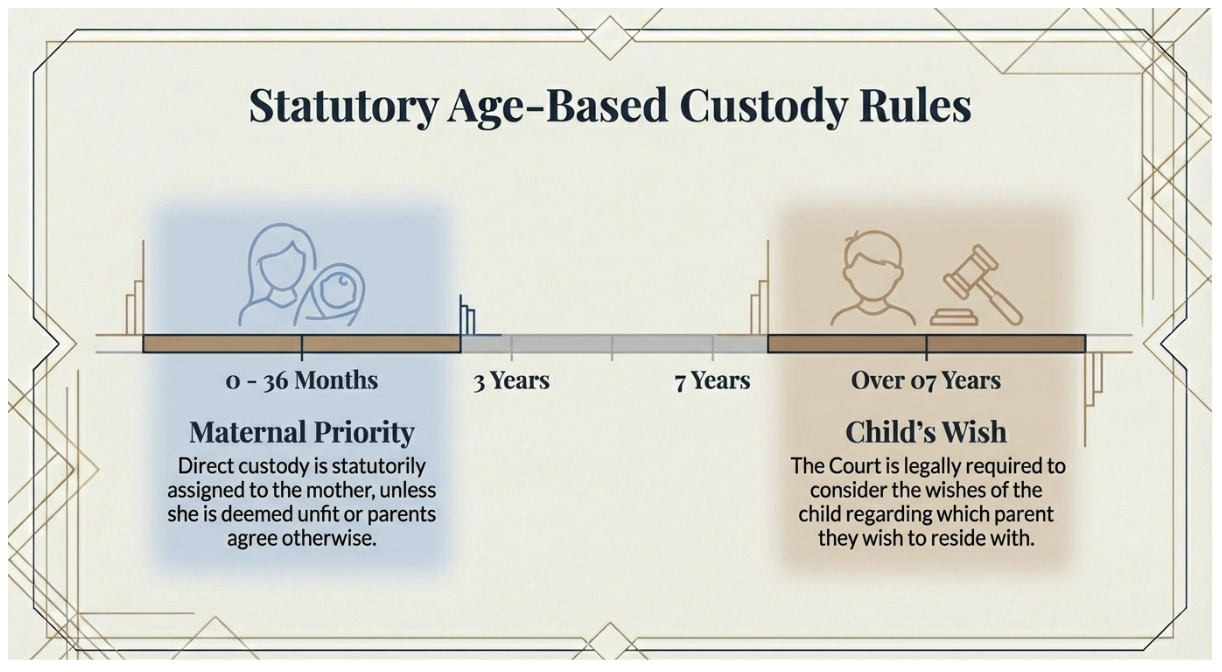
Statutory Age-Based Rules
- Children under 36 months: Direct custody is statutorily assigned to the mother, unless she is deemed unfit or the parents agree otherwise.
- Children over 07 years: The Court is legally required to consider the wishes of the child regarding which parent they wish to reside with.
📞 Contact DHH Law Firm Today
Facing a divorce in a foreign legal system can be daunting. Protecting your assets and custody rights requires precise legal maneuvering and strategic representation.
🏢 Main Office: 2nd Floor, 829 Huynh Tan Phat Street, Phu Thuan Ward, Ho Chi Minh City, Vietnam
📞 Hotline:
- +84 89 9352 777 (Vietnamese)
- +84 89 9351 777 (English)
🌐 Website: www.dhhlawfirm.vn
📧 Email: contact@dhhlawfirm.vn
✨ DHH Law Firm – Your trusted legal partner for family and foreign-related civil procedures in Vietnam