
Vietnam as an Attractive Market for Foreign Entrepreneurs
Vietnam has become an appealing destination for foreigners looking to establish a business in Southeast Asia. A growing domestic market, competitive labor costs, and an improving investment environment attract many expat entrepreneurs and small foreign investors. However, practical legal experience shows that many problems arise after incorporation, not during the registration stage. These issues typically stem from an incomplete understanding of how Vietnam’s investment, enterprise, labor, and immigration laws interact with one another.
Understanding the Dual Legal Framework Governing Foreign-Owned Companies
One of the most important legal realities foreigners must understand is that company establishment in Vietnam is governed by two interconnected but separate legal regimes. The Investment Law determines whether a foreigner may invest in a particular sector, under what conditions, and with what ownership structure. The Enterprise Law, on the other hand, regulates the formation and internal operation of the company once investment approval has been granted. Legal risks frequently arise when investors focus only on registering the company while overlooking investment conditions that may later restrict business activities or expansion.
Choosing the Correct Business Line and Identifying Conditional Sectors
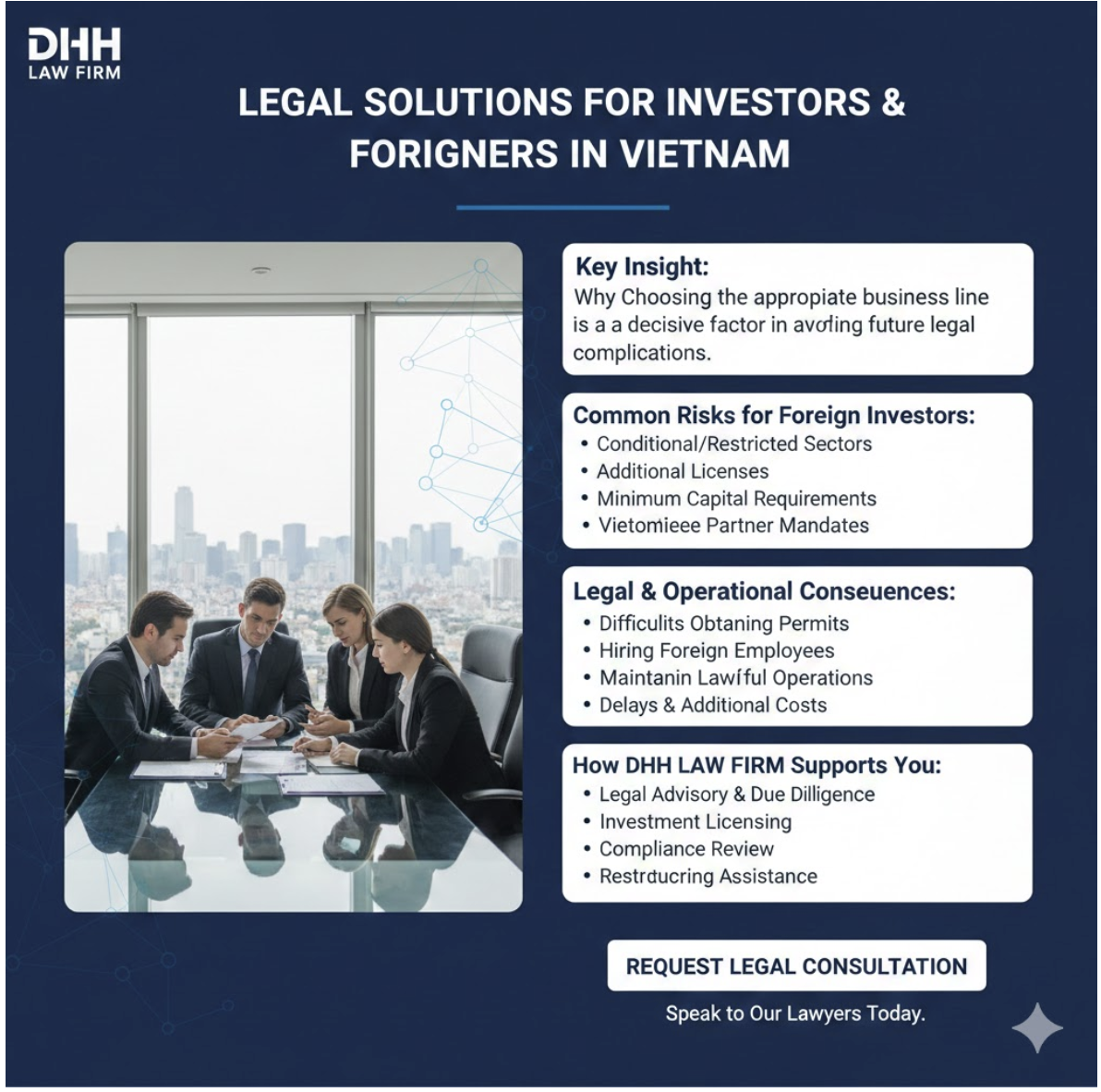
DHH LAW FIRM | Legal Services For Foreign Investors
Capital Contribution Obligations and Their Legal Consequences
For foreign-invested companies, registered capital is a binding legal commitment rather than a symbolic figure. Vietnamese law requires foreign investors to contribute capital fully and on time as stated in the Investment Registration Certificate. Failure to comply may lead to administrative penalties and mandatory amendments. More importantly, capital contribution status directly affects immigration matters, including eligibility for investor visas and temporary residence cards. Investors who fail to meet capital obligations may find it difficult to maintain lawful residence in Vietnam.
Whether Foreign Owners Are Allowed to Work in Their Own Company
A common misconception among expat entrepreneurs is that company ownership automatically allows them to work freely within their business. In practice, ownership and employment are legally distinct. While certain investor roles may qualify for work permit exemption, foreigners who engage in executive management, technical operations, or daily business activities may still require a work permit. Misunderstanding this distinction can expose both the individual and the company to labor and immigration violations.
Immigration Compliance as an Integral Part of Company Setup
Immigration status should never be treated as a separate issue from company formation. Foreign business owners must ensure that their visa type, duration of stay, and residence status align with their investment and employment activities. Problems often occur when foreigners remain in Vietnam on inappropriate visas, fail to renew visas on time, or overstay while waiting for work permits or residence cards. Even short overstays can have long-term consequences for future visa approvals and business continuity.
Tax and Accounting Compliance from the First Day of Operation
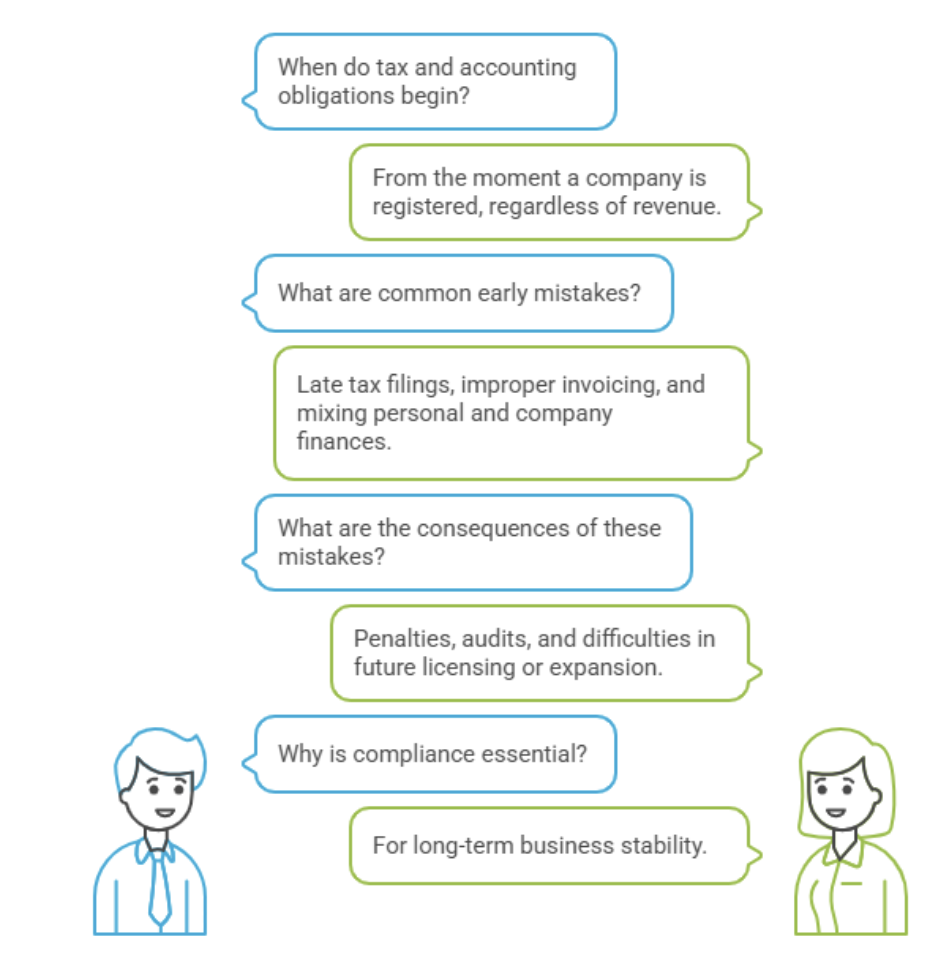
Tax and accounting obligations apply from the moment a company is registered, regardless of whether it has generated revenue. Many foreign startups make early mistakes such as late tax filings, improper invoicing, or mixing personal and company finances. These errors may seem minor at first but can result in penalties, audits, and difficulties in future licensing or expansion. Proper tax and accounting compliance is therefore essential to long-term business stability.
Labor Law Compliance When Hiring Employees
Once a company begins hiring staff, it must comply with Vietnamese labor laws regarding employment contracts, social insurance contributions, and labor reporting. Failure to meet these obligations may trigger labor inspections and negatively affect work permit applications for foreign employees. For foreign-owned startups, labor compliance is often closely scrutinized and should be carefully managed from the beginning.
Planning an Exit Strategy Before Problems Arise
Many foreign investors do not consider exit strategies when establishing their company. However, business plans may change, and not all ventures succeed as expected. Company dissolution in Vietnam requires tax finalization, settlement of employee rights, and adjustment of immigration status for foreign owners. Without proper planning, closing a company may lead to prolonged administrative procedures and unexpected immigration complications.
The Importance of Early Legal Planning
Most legal risks faced by foreign-owned companies in Vietnam arise from inadequate planning rather than intentional violations. Early legal advice allows foreign investors to align investment structure, business operations, labor compliance, and immigration status from the outset. This integrated approach significantly reduces legal risks and provides a stable foundation for sustainable business operations in Vietnam.
📞 Contact DHH Law Firm Today
Setting up a company in Vietnam requires more than registration documents. Professional legal guidance helps foreign investors operate lawfully, avoid risks, and plan for long-term success.
🏢 Main Office: 2nd Floor, 829 Huynh Tan Phat Street, Phu Thuan Ward, Ho Chi Minh City, Vietnam
📞 Hotline: +84 89 9352 777 (VN) | +84 89 9351 777 (ENG)
🌐 Website: www.dhhlawfirm.vn
📧 Email: contact@dhhlawfirm.vn
✨ DHH Law Firm – Your trusted legal partner for family and foreign-related civil procedures in Vietnam.