With continuous economic development, an increasing number of foreign experts and investors are living, working, and accumulating substantial assets (bank deposits, company shares, luxury apartments, etc.) in Vietnam. To protect the fruits of their labor and prevent future legal complications for their loved ones, the demand for a foreigner making a will in Vietnam is rising rapidly.
However, this procedure requires a profound understanding of international private law and jurisdictional conflicts. The following article details the conditions required to ensure this will is 100% legally effective in Vietnam.
1. Applicable Law: The Law of Nationality or Vietnamese Law?
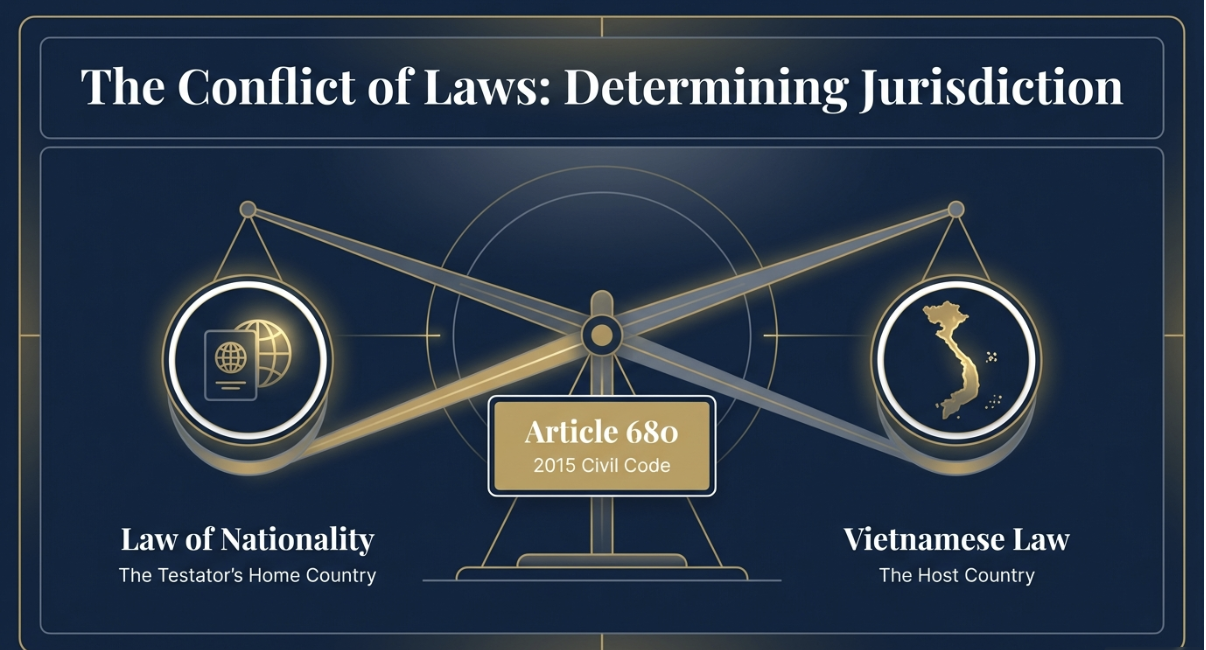
When a foreigner is making a will in Vietnam, the biggest question is which legal system will govern the document. According to Article 680 of the 2015 Civil Code, Vietnam applies the following principles regarding the choice of law:
- Testamentary Capacity (Age, Mental Soundness): This must comply with the law of the country of which the testator is a citizen. For example, if your home country’s law states you must be 21 to make a valid will, you must adhere to that age requirement even while in Vietnam.
- Form of the Will: A will made in Vietnam will be recognized as legally valid if its form complies with either Vietnamese law or the law of the country where the testator holds citizenship.
- Crucial Exception (Real Estate): If the inherited asset is immovable property located within the territory of Vietnam (e.g., apartments, houses), all rights to dispose of and inherit this property must strictly comply with Vietnamese law.
2. Form of the Will, Language Requirements, and Witnesses
For the will to be easily enforceable at state agencies, banks, or companies in Vietnam in the future, the most optimal form is a Notarized/Certified Written Will.
Below are the mandatory conditions when notarizing a will for a foreign national at a Vietnamese Notary Public Office:
Regarding Language and Interpreters
Vietnam’s law on notarization stipulates that the official spoken and written language used in notarization is Vietnamese. Therefore:
- If the foreigner cannot fluently read and understand Vietnamese, a qualified interpreter is mandatory.
- The interpreter must have a good understanding of the law, commit to translating accurately, and have no property rights or obligations related to the will (i.e., they absolutely cannot be an heir).
- Recommendation: The will should be drafted in a bilingual format (English – Vietnamese) or the testator’s native language accompanied by a Vietnamese translation, bearing the confirmation signature of the interpreter.
Regarding Witnesses
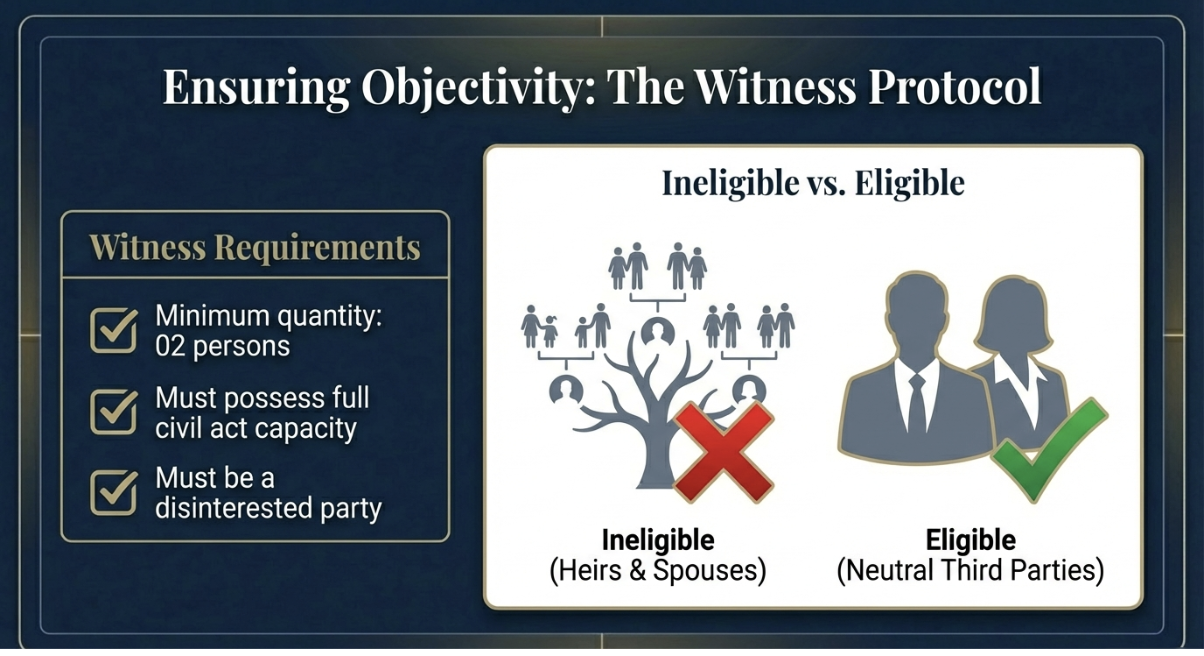
To ensure objectivity and prevent future disputes:
- The drafting of the will should involve at least 02 witnesses.
- A witness must not be an heir (neither a testamentary heir nor a statutory heir), must not be a person with property rights or obligations related to the will’s contents, and must possess full civil act capacity.
3. What to Note When Disposing of Real Estate in Vietnam
If the assets are movable property (funds in bank accounts, vehicles, shares, capital contributions in a company), the foreign national has the freedom to dispose of them and leave them to anyone. However, if the asset is immovable property (housing, apartments), the 2026 regulations impose extremely strict limitations that the testator must know:
- Limits on Ownership Rights: Foreigners are only permitted to own housing/apartments located within commercial housing construction investment projects (excluding areas designated for national defense and security).
- Foreign Heirs: If you leave your apartment to a relative who is also a foreign national, that person must meet the conditions for lawful entry into Vietnam to be named on the Pink Book. Their ownership term will be the remaining period of your original ownership term.
- Enjoying the Value Only (If Ineligible): If the heir does not belong to the category of individuals eligible to own housing in Vietnam, they will not be issued the Certificate (Pink Book). Instead, they are only entitled to sell or gift the house to enjoy the value (receive the monetary proceeds).
📞 Contact DHH Law Firm Today
If you have any questions or require legal assistance regarding Work Permits, please contact DHH Law Firm:
🏢 Main Office: 2nd Floor, 829 Huynh Tan Phat Street, Phu Thuan Ward, Ho Chi Minh City, Vietnam
📞 Hotline:
- +84 89 9352 777 (Vietnamese)
- +84 89 9351 777 (English)
🌐 Website: www.dhhlawfirm.vn
📧 Email: contact@dhhlawfirm.vn
✨ DHH Law Firm – Your trusted legal partner for family and foreign-related civil procedures in Vietnam.