
Renting a property is essential for the expatriate community in Vietnam. However, due to language barriers and differences in the legal system, tenancy disputes are becoming increasingly common.
This article analyzes common risks and outlines the legal procedure for deposit recovery and protecting the legitimate rights of foreign tenants.
1. Common Legal Risks in Tenancy
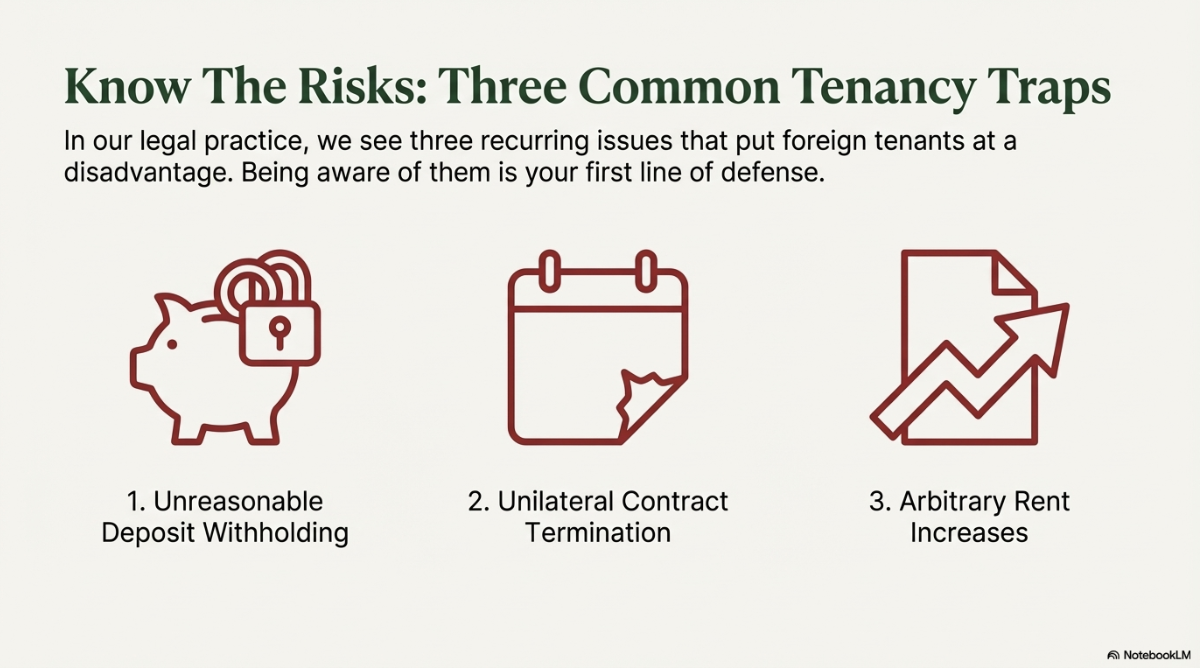
In legal practice, the most frequent issues foreigners face include:
- Unreasonable Deposit Withholding: Upon contract expiration, landlords often cite various reasons (natural wear and tear, minor damages) to deduct from or refuse to refund the security deposit.
- Unilateral Termination: The landlord reclaims the property before the lease term ends without prior notice or providing compensation as agreed.
- Arbitrary Rent Increases: Raising the rent before the contract term expires without mutual consent.
2. Preventive Solutions: The Importance of the Lease Agreement
To avoid risks, “prevention is better than cure.” The Lease Agreement is the most critical legal basis.
- Bilingual Contracts: It is imperative to sign a contract in both Vietnamese and English (or the tenant’s native language). Note: Under Vietnamese law, if a dispute arises, the Vietnamese version often takes precedence. Therefore, meticulous review is required to ensure both versions are consistent.
- Clear Penalty Clauses: The contract must specify:
- Conditions for deposit refund.
- Timeline for refund (e.g., within 7 days after handover).
- Penalty for early termination by the landlord (typically compensating double the deposit amount).
3. Dispute Resolution Process & Deposit Recovery
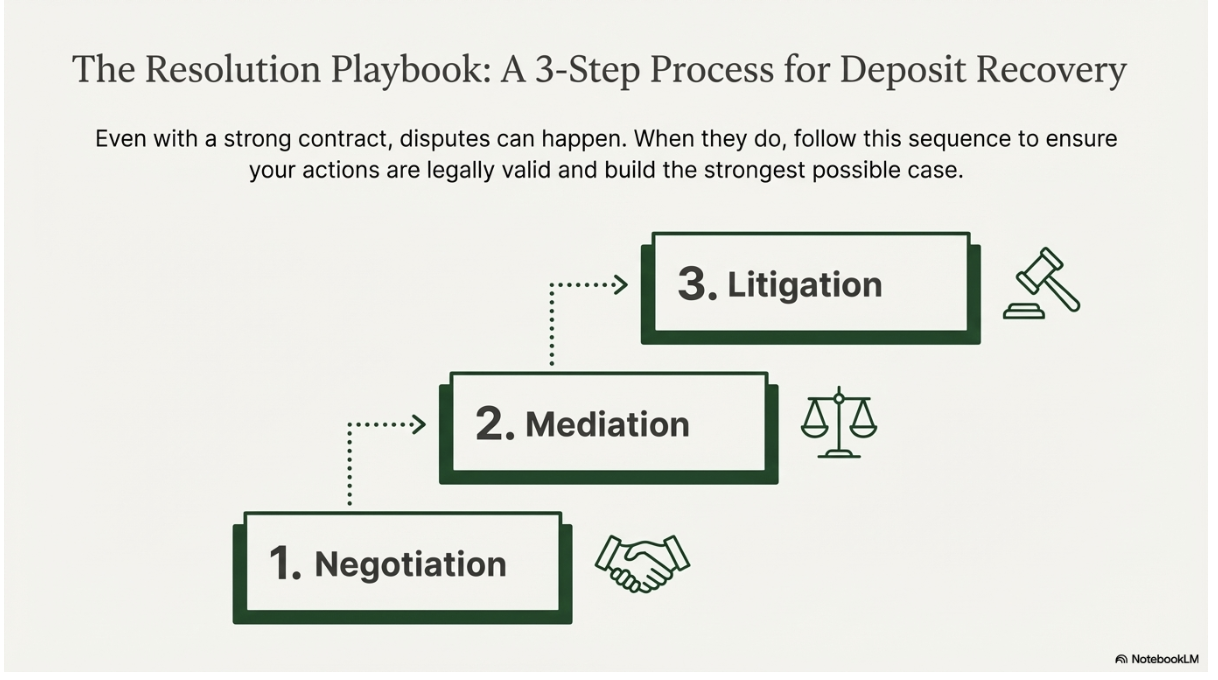
When a dispute arises, tenants should follow this sequence to ensure legal validity:
Step 1: Negotiation
This is the first and most efficient step. Both parties should meet to compare the current condition of the property with the initial handover protocol. All agreements or disputes should be documented via email, text messages, or meeting minutes to serve as evidence.
Step 2: Mediation
If negotiation fails, parties can request intervention from a grassroots mediator or the People’s Committee of the ward/commune where the property is located. A successful mediation record holds significant legal weight.
Step 3: Litigation (Lawsuit)
This is the final resort. If the landlord intentionally misappropriates the deposit unlawfully, the tenant has the right to file a lawsuit at the competent People’s Court.
- Preparation: The tenant needs the Lease Agreement, proof of deposit payment, and evidence of the landlord’s breach.
- Costs: Court fees and legal costs can be included in the compensation claim.
Need Legal Support for Tenancy Disputes?
Recovering a deposit or handling a rental dispute in a foreign country can be stressful. If you are facing difficulties with your landlord or need to review a lease agreement before signing, please contact us:
📞 Contact DHH Law Firm Today
🏢 Main Office: 2nd Floor, 829 Huynh Tan Phat Street, Phu Thuan Ward, Ho Chi Minh City, Vietnam
📞 Hotline:
+84 89 9352 777 (Vietnamese)
+84 89 9351 777 (English)
🌐 Website: www.dhhlawfirm.vn
📧 Email: contact@dhhlawfirm.vn
✨ DHH Law Firm – Your trusted legal partner for family and foreign-related civil procedures in Vietnam.