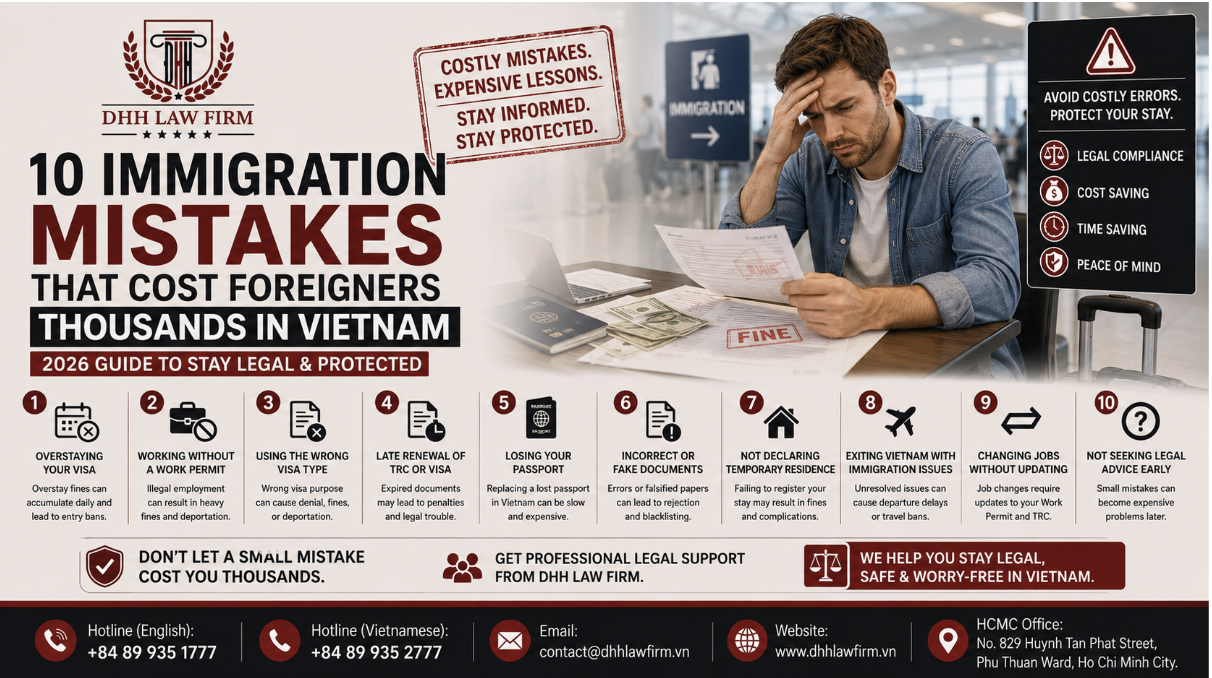
Moving to Vietnam is relatively easy. Staying in Vietnam legally and without unnecessary complications is where things can become more complicated.
A foreign employee may enter Vietnam on a Business Visa and assume that they can start working immediately. A tourist may notice that their visa expires tomorrow but decide to deal with it next week. Someone may lose their passport and think that replacing it at their embassy is the only thing they need to do.
Another foreign resident may have a Temporary Residence Card (TRC) that is still valid for several months and assume that nothing needs to be done after changing employers.
These situations look completely different. But they have one thing in common:
A small immigration mistake can become an expensive problem when it is discovered too late.
The cost is not always a government fine. You may also face cancelled travel plans, additional flights, lost working days, document legalization costs, accommodation expenses, or complications with future immigration applications.
At DHH LAW FIRM, we regularly encounter cases where the underlying problem could have been avoided if the foreign national had received the right advice earlier. This guide highlights 10 common Vietnam immigration mistakes that foreigners should know before they become expensive problems.
Quick Self-Check: How Many of These Mistakes Have You Made?
Before reading the explanations, take a quick look.
| Immigration Mistake | Risk Level | |
| 1 | Working on a Business Visa | 🔴 High |
| 2 | Waiting too long to extend a visa | 🟠 High |
| 3 | Losing your passport | 🔴 High |
| 4 | Failing to make the appropriate police report after a lost passport | 🔴 High |
| 5 | Using the wrong Work Permit arrangement | 🔴 High |
| 6 | Ignoring an expiring TRC | 🔴 High |
| 7 | Having the wrong sponsor | 🔴 High |
| 8 | Working without the required authorization | 🔴 High |
| 9 | Failing to legalize foreign documents when required | 🟠 High |
| 10 | Booking a flight before confirming departure requirements | 🔴 High |
If you recognize your current situation in even one of these examples, don’t automatically assume the problem is minor.
Mistake #1 — Working in Vietnam on a Business Visa
This is one of the most common misunderstandings among foreign professionals. A company invites you to Vietnam. You receive a Business Visa.
You arrive. Then your employer says:
“You can start working while we prepare the Work Permit.”
It sounds reasonable. But a visa allowing you to enter or stay in Vietnam for a particular purpose does not automatically mean that you are authorized to perform employment activities.
The legal requirements for foreign employment must be considered separately. This distinction becomes especially important when a foreigner moves from business meetings or investment activities into an actual employment relationship.
The expensive mistake – Starting work first and asking questions later can expose both the employee and employer to immigration and labour-law consequences.
Better approach – Before your first working day, confirm whether you need a Work Permit, whether you qualify for an exemption, and what immigration status should accompany your employment.
At DHH LAW FIRM, we recommend reviewing the employment structure before the employee starts working rather than trying to correct the situation afterwards.
Mistake #2 — Waiting Until the Last Minute to Extend Your Visa
Your visa expires next week. You are busy. You tell yourself: “I’ll handle it tomorrow.”
Foreigner checking the expiration date of a Vietnam visa before applying for an extension
Tomorrow becomes next week. Then the visa expires. This is how a simple administrative task can become a visa overstay problem. The key issue is not simply remembering the expiry date.
It is allowing yourself enough time to understand what immigration procedure is actually available to you. Your nationality, visa category, sponsor and immigration circumstances may affect the appropriate solution.
Don’t confuse these two situations: Visa approaching expiry versus Visa already expired
They should not automatically be treated as the same situation.
If your visa is approaching its expiry date, DHH LAW FIRM recommends reviewing your options early rather than waiting until the final day.
Mistake #3 — Losing Your Passport and Assuming the Problem Ends at the Embassy
Losing a passport is already stressful. But replacing the passport is only one part of the problem. If you are a foreigner living in Vietnam, your passport may be connected to your visa, Temporary Residence Card, entry records and other immigration information.
Therefore, after losing it, you should think beyond:
“How do I get a new passport?”
You also need to consider:
“How do I restore my ability to travel and maintain or resolve my immigration status in Vietnam?”
This becomes particularly important if you were planning to leave Vietnam soon. A replacement passport issued by your embassy does not automatically resolve every Vietnamese immigration requirement.
This is one of the reasons Lost Passport in Vietnam is a separate and important immigration topic.
Mistake #4 — Not Obtaining the Appropriate Police Report After Losing a Passport
A foreigner loses their passport. They immediately contact their embassy. They receive a new travel document. Then they discover that Vietnamese immigration authorities require evidence concerning the lost passport.
This is where many people realize that the first few hours after losing a passport were more important than they thought.
A police report or other official documentation may be relevant to subsequent immigration procedures, depending on the circumstances. The exact process can vary depending on where and how the passport was lost and what immigration procedure follows.
The practical lesson
Do not treat a lost passport as merely an embassy matter. It can also become a Vietnam immigration matter.
Mistake #5 — Assuming Your Work Permit Automatically Follows You to a New Job
You change employers. Your old Work Permit is still valid. Your new employer says: “You already have a Work Permit, so you can start.” This assumption can be dangerous.
A Work Permit is not simply a general permission to work for any company in Vietnam. Employment with a new employer can require a new assessment of the foreign worker’s legal authorization. The exact procedure depends on the circumstances and applicable regulations.
The expensive mistake
Starting work for the new employer before the required employment authorization is properly addressed.
Better approach
Treat a change of employer as a new immigration and employment checkpoint.
Before starting the new position, ask DHH LAW FIRM to review your Work Permit, current immigration status and proposed employment arrangement.
Mistake #6 — Ignoring an Expiring or Changed TRC
A Temporary Residence Card looks reassuring. It has a clear expiry date.
So when employment changes, some foreigners simply put the card back in their wallet. That can be a mistake. If the TRC was issued based on a particular sponsor, employment relationship or immigration purpose, a significant change in those circumstances may require the residence status to be reviewed.
The important question is not simply: “When does my TRC expire?”
It is: “Does my current TRC still correspond to my present immigration circumstances?” This distinction is particularly important for foreign employees who have changed employers or whose sponsoring relationship has ended.
💡 EEAT Insight
At DHH LAW FIRM, immigration reviews are not limited to checking expiry dates. We look at the legal basis behind the document—because a document’s validity period and the circumstances supporting that document are not always the same thing.
Mistake #7 — Using the Wrong Sponsor
Immigration sponsorship is not simply a matter of putting a company’s name on a form. The sponsor must have the appropriate legal basis to invite, guarantee or support the foreign national under the relevant immigration procedure.
Problems can arise when:
- an employee changes companies;
- an investor changes business structures;
- a foreigner moves from one sponsor to another; or
- the person assumes that any Vietnamese company can sponsor any type of visa.
A mismatch between the person’s actual circumstances and the sponsoring arrangement can create complications later. Think of sponsorship as a legal relationship. If the relationship changes, your immigration documents may need to be reviewed.
Mistake #8 — Working Without the Required Authorization
This is more serious than simply choosing the wrong visa category. Some foreigners begin working because:
“The company needs me urgently.”
Others believe that working remotely for a foreign company automatically means Vietnamese employment rules do not matter. Still others assume that a short period of work cannot create a problem. These assumptions can be dangerous.
Foreign employment in Vietnam is subject to specific legal requirements, and whether authorization is required depends on the circumstances. If you are unsure whether your role requires a Work Permit or whether you qualify for an exemption, clarify the position before starting work.
Mistake #9 — Ignoring Consular Legalization of Foreign Documents
- Your marriage certificate is genuine.
- Your university degree is genuine.
- Your birth certificate is genuine.
So you naturally assume: “Vietnam should accept it.”
But authenticity is not necessarily the same thing as being ready for use in a Vietnamese administrative procedure. Foreign-issued documents may require authentication, consular legalization and Vietnamese translation, depending on the document, issuing country, intended procedure and any applicable exemption.
This issue frequently appears in:
- Family Immigration
- Marriage Registration
- Work Permit applications
- Education and professional qualifications
- Birth and nationality procedures
Waiting until the final stage to discover that a key document needs legalization can delay the entire application. For international families and foreign professionals, DHH LAW FIRM can review foreign documents at the beginning of the process and identify potential legalization requirements before the application is submitted.
Mistake #10 — Booking Your Flight Before Confirming Your Exit Requirements
This may be the most frustrating mistake because it can happen on the day you thought everything was finished.
- You have your suitcase.
- You have your boarding pass.
- Your taxi arrives at the airport.
Then you discover that your immigration situation requires additional procedures before you can depart. This can happen in situations involving unresolved immigration issues, expired documents, lost passports or other circumstances requiring additional formalities. The lesson is simple:
Don’t make your flight the first step in your departure plan.
Make sure your immigration status and departure requirements have been reviewed before committing to a non-refundable international itinerary. At DHH LAW FIRM, we assist foreign nationals in assessing departure-related immigration issues, including cases where an Exit Visa Vietnam procedure may become relevant.
The 10 Mistakes — One Last Check
| Mistake | What Can Go Wrong? | Safer Approach |
| Business Visa + employment | Employment compliance problems | Review Work Permit requirements |
| Late visa extension | Overstay | Plan before expiry |
| Lost passport | Immigration/travel disruption | Address passport + Vietnam immigration together |
| No police report | Difficulty with subsequent procedures | Obtain appropriate official documentation |
| Wrong Work Permit | Problems after changing employer | Review authorization before starting new work |
| Expired/changed TRC | Residence status complications | Review status after major changes |
| Wrong sponsor | Immigration application problems | Verify sponsor eligibility |
| Illegal employment | Labour + immigration consequences | Confirm authorization before working |
| No document legalization | Application delays | Check foreign documents early |
| Flight booked too early | Departure delays / extra costs | Confirm immigration requirements first |
The Real Cost of an Immigration Mistake
The word “cost” does not only mean a government penalty. An immigration problem can create a chain reaction:
A problem that could have been resolved through a simple consultation can become significantly more expensive once travel, employment and residence arrangements are affected. That is why prevention is often cheaper than correction.
When Should You Contact an Immigration Lawyer?
You do not need to wait until you receive a penalty notice or are stopped at the airport. Professional advice can be particularly useful when you are about to:
- start a new job
- change employers
- renew or change a visa
- apply for a TRC
- bring your family to Vietnam
- replace a lost passport
- leave Vietnam after an immigration issue
- use foreign documents for a Vietnamese procedure
At DHH LAW FIRM, the goal is not to make every immigration matter complicated. It is the opposite. We help identify potential problems before they become complicated.
How DHH LAW FIRM Can Help
Vietnamese immigration procedures can involve several overlapping documents and legal requirements. A foreigner may be dealing with a visa, Work Permit, TRC, sponsor, passport and supporting documents at the same time.
This is why DHH LAW FIRM takes a case-based approach. Our legal team can review your current circumstances, identify potential immigration risks and explain the appropriate legal pathway before you take the next step.
Whether you are an employee changing jobs, an investor establishing a business, a family relocating to Vietnam, or a foreign national dealing with a lost passport or visa problem, DHH LAW FIRM can provide practical immigration guidance tailored to your circumstances.
Frequently Asked Questions
-
What are the most common Vietnam immigration mistakes foreigners make?
→ Common problems include working without the appropriate authorization, delaying visa procedures, mishandling a lost passport, using an inappropriate sponsor, overlooking TRC changes and failing to prepare foreign documents correctly.
-
Can I work in Vietnam with a Business Visa?
→ A Business Visa does not automatically authorize employment. Foreign nationals should determine whether a Work Permit or an applicable exemption is required before beginning work.
-
What should I do if I lose my passport in Vietnam?
→ Contact the relevant authorities and your embassy or consulate, and address the Vietnamese immigration consequences of the lost passport. Replacing the passport alone may not resolve your Vietnam immigration status.
-
Can my old Work Permit be used for my new employer?
→ Do not assume that it can. A change of employer should be reviewed before you begin working for the new company.
-
Can I use a foreign marriage certificate in Vietnam?
→ Depending on the document and procedure, foreign-issued documents may require authentication, consular legalization and Vietnamese translation unless an exemption applies.
-
Should I book my flight before resolving an immigration problem?
→ It is generally safer to confirm your immigration and departure requirements before booking a non-refundable flight, particularly if your case involves an expired document, lost passport or other unresolved immigration issue.
Contact DHH Law Firm for Expert Immigration Support
- Hotline (English): +84 89 935 1777
- Hotline (Vietnamese): +84 89 935 2777
- Email: contact@dhhlawfirm.vn
- Website: www.dhhlawfirm.vn
- HCMC Office: No. 829 Huynh Tan Phat Street, Phu Thuan Ward, Ho Chi Minh City