
Vietnam has become one of Southeast Asia’s most attractive destinations for foreign investment. With strong GDP growth, competitive labor costs, and expanding trade agreements, company formation in Vietnam is no longer just an option—it’s a strategic move.
This guide is built differently from generic “how-to” articles. Instead of only listing steps, it helps you understand the structure, legal pathways, and strategic decisions behind setting up a company in Vietnam.
1. Why Vietnam? (The Strategic Context Investors Care About)
Vietnam economic growth and business environment for foreign investors
Before diving into procedures, here’s what actually drives foreign investors:
- Market access: 100M+ population with rising middle class
- Trade advantages: EVFTA, CPTPP, RCEP
- Cost efficiency: Lower operational costs vs. Thailand, China
- Political stability: Predictable regulatory environment
👉 Translation: Vietnam is not just cheap—it’s positioned for long-term growth and export leverage.
2. Choosing the Right Legal Structure (This Is Where Most Investors Go Wrong)
When it comes to company formation in Vietnam, structure determines everything: tax, control, liability, and compliance.
Common business entities:
- Limited Liability Company (LLC)
- 100% foreign-owned allowed (in most sectors)
- Flexible structure (1 or multiple members)
- Most popular choice
- Joint Stock Company (JSC)
- Required if you plan to raise capital publicly
- More complex governance
- Representative Office (RO)
- No business activities allowed
- Only market research & liaison
- Branch Office
- Limited sectors only
- Direct commercial activities permitted
👉 If you’re unsure: 90% of foreign investors choose LLC first, then scale later.
3. Market Access & Foreign Ownership Rules
This is the most misunderstood part of company formation.
Vietnam regulates foreign investment based on:
- WTO commitments
- Conditional business lines
- Local licensing practices
Key realities:
- Some industries allow 100% foreign ownership
- Others require:
- Joint venture with Vietnamese partner
- Specific licenses
- Certain sectors are restricted or prohibited
👉 Example sectors with conditions:
- Education
- Logistics
- Advertising
- Real estate
⚠️ Mistake to avoid: assuming you can open a company in any industry without checking conditions.
4. The Licensing Architecture (How Vietnam Actually Approves Your Company)
company formation in Vietnam legal documents and business registration process
Unlike many countries, Vietnam uses a two-layer licensing system:
Step 1: Investment Registration Certificate (IRC)
- Applies to foreign investors
- Approves your investment project
Step 2: Enterprise Registration Certificate (ERC)
- Creates your legal entity
👉 Only after both are issued → your company legally exists.
5. Capital Requirements & Financial Planning
Vietnam does not always impose fixed minimum capital—but:
- Capital must be realistic and justifiable
- Authorities assess:
- Business scale
- Industry
- Location
Practical benchmarks:
- Small service company: $10,000 – $50,000
- Trading company: $50,000 – $200,000
- Manufacturing: $200,000+
⏱ Capital must usually be contributed within 90 days after ERC issuance
6. Timeline: How Long Does It Take?
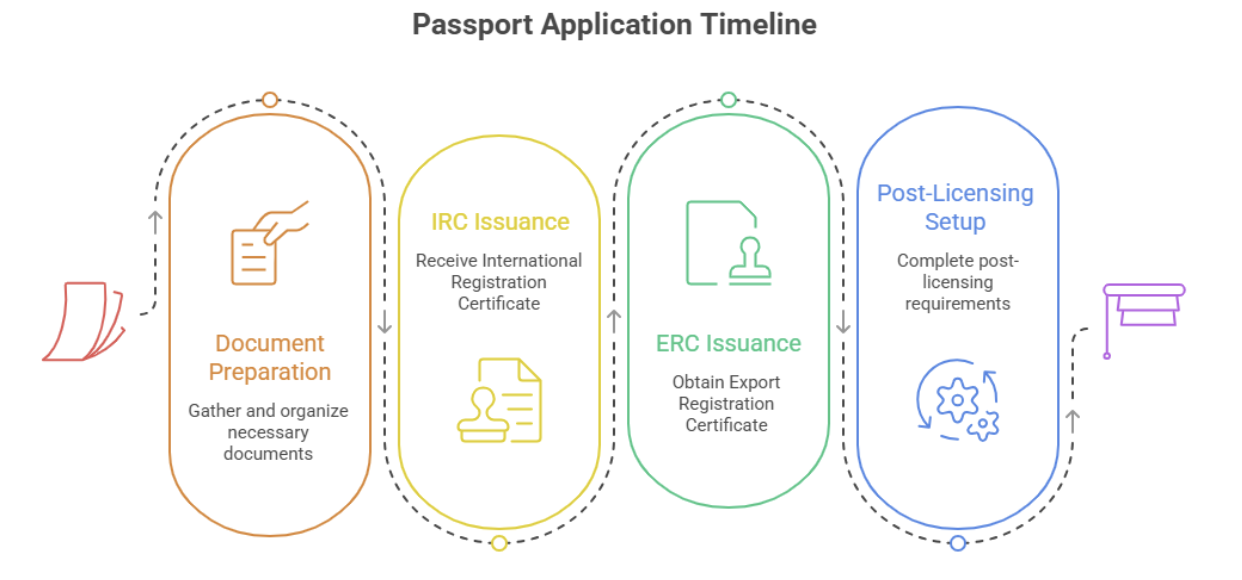
| Phase | Time |
| Document preparation | 3–7 days |
| IRC issuance | 10–20 working days |
| ERC issuance | 3–7 working days |
| Post-licensing setup | 5–10 days |
👉 Total: 3–6 weeks (standard case)
7. Post-Formation Compliance (Where Many Companies Fail)
business operations and compliance after company formation in Vietnam
Getting licensed is just the beginning.
You must complete:
- Company seal (legal requirement)
- Tax registration & digital signature
- Bank account opening
- Initial tax declaration
- Office lease compliance
👉 Missing these steps can lead to penalties or inactive status.
8. Tax Overview (Keep It Practical)
Main taxes in Vietnam:
- Corporate Income Tax (CIT): 20% standard
- Value Added Tax (VAT): 0% / 5% / 10%
- Personal Income Tax (PIT): progressive
Incentives available:
- High-tech sectors
- Industrial zones
- Export-oriented businesses
9. Common Pitfalls (Real-World Insights)
- ❌ Choosing wrong business line → license rejection
- ❌ Unrealistic capital → delays approval
- ❌ Using virtual office → compliance issues
- ❌ Ignoring post-licensing → penalties
👉 Most problems don’t come from the law—they come from wrong assumptions.
10. Should You Use a Legal Service Provider?
You should strongly consider it if:
- You are a foreign investor
- Your industry has conditions
- You want faster approval
- You want to avoid compliance risks
A professional firm can:
- Structure your investment correctly
- Handle IRC & ERC efficiently
- Ensure full legal compliance
FAQ Section (SEO Booster)
Can foreigners fully own a company in Vietnam?
Yes, in many sectors. However, some industries require joint ventures or special conditions.
Do I need to be in Vietnam to open a company?
Not necessarily. You can authorize a legal representative.
What is the minimum capital required?
There is no fixed amount, but it must be reasonable for your business activity.
How long does company formation take?
Typically 3–6 weeks depending on complexity.
Conclusion
Company formation in Vietnam is not just about paperwork—it’s about making the right strategic decisions from the start.
If done correctly, Vietnam offers:
- Strong growth potential
- Regional expansion opportunities
- Long-term investment advantages
If done wrong, it leads to delays, compliance risks, and unnecessary costs.