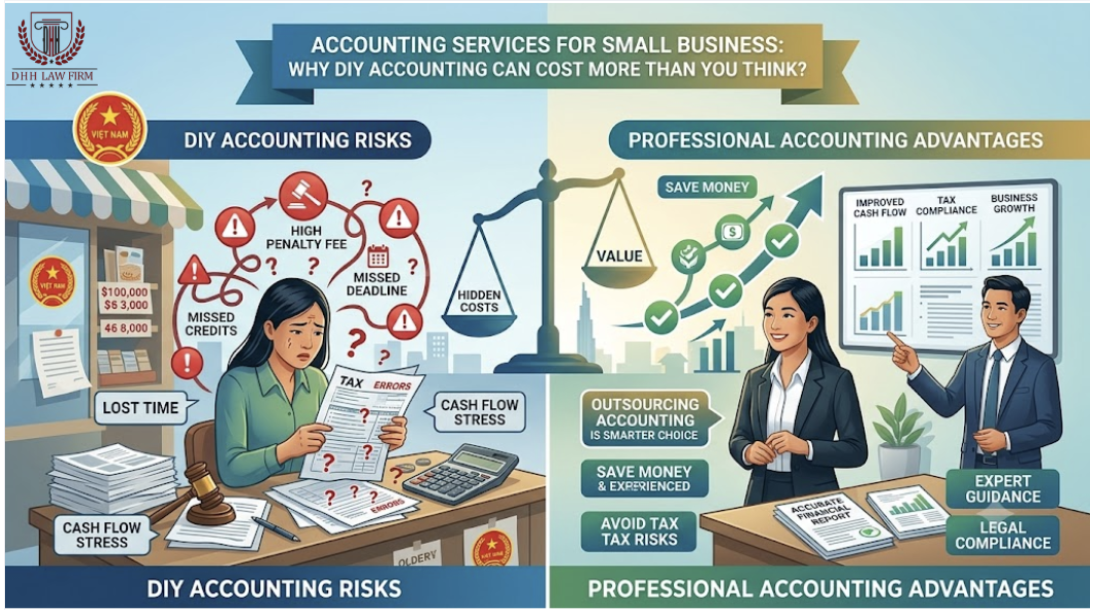
Accounting Services for Small Business: The Hidden Costs of Managing Your Own Books
Most small business owners do not start a company because they enjoy bookkeeping. They start a business because they have a product to sell, a service to offer, or a market opportunity they want to pursue.
Yet once operations begin, many entrepreneurs find themselves spending evenings reviewing invoices, organizing receipts, tracking expenses, and trying to understand tax regulations.
At first, handling accounting internally may seem like a sensible way to reduce costs. The logic appears straightforward: “Why pay an accounting firm when I can manage the books myself?”
For some businesses, this approach works temporarily. For many others, however, the real costs only become visible months or years later. Missed tax deadlines, inaccurate financial records, compliance violations, and poor financial visibility often cost significantly more than professional accounting support.
This article explores why accounting services have become an essential resource for small businesses and how proper financial management contributes to sustainable growth.
The Biggest Accounting Mistake Small Businesses Make
The most expensive accounting mistake is not an incorrect tax filing. It is believed that accounting exists only for tax purposes. Many small business owners view accounting as a year-end obligation rather than a management tool.
As a result:
By the time problems become obvious, the financial impact can be substantial. Professional accounting is not merely about reporting what happened in the past. It helps business owners understand what is happening now and what may happen next.
When Business Growth Starts Creating Accounting Problems
The early stages of a business are often relatively simple. A few clients, limited expenses, and straightforward transactions make bookkeeping manageable. Growth changes everything. Suddenly the business must track:
- Employee salaries
- Vendor payments
- Tax obligations
- Customer invoices
- Operational expenses
- Business contracts
- Regulatory compliance requirements
What once required a few hours each month can evolve into a full-time administrative responsibility. Many owners do not realize they have outgrown their accounting systems until errors begin affecting operations.
Why Small Businesses Are More Vulnerable to Tax Risks?
Large corporations typically maintain dedicated finance departments. Small businesses often do not have that luxury. As a result, accounting responsibilities frequently fall to:
- Business owners
- Administrative staff
- Part-time bookkeepers
- Individuals without formal accounting training
This creates greater exposure to compliance issues. Common problems include:
Incorrect Expense Classification: An expense recorded incorrectly today may become a tax issue during a future audit.
Missed Filing Deadlines: Late filings often result in penalties regardless of business size.
Incomplete Supporting Documents: Invoices, contracts, and payment records must be properly maintained.
VAT Compliance Errors: For businesses subject to Value Added Tax obligations, mistakes can have significant consequences.
Small errors repeated over time can become major liabilities.
The Cash Flow Problem Nobody Sees Coming
Many profitable businesses experience financial difficulties. This may seem contradictory, but profitability and cash flow are not the same thing. A business can generate strong sales while struggling to pay suppliers, employees, or taxes.
Without accurate accounting records, business owners often lack visibility into:
- Upcoming obligations
- Outstanding receivables
- Operating margins
- Seasonal cash flow fluctuations
Professional accounting services help transform financial data into actionable business information. This visibility allows business owners to make decisions with greater confidence.
A Real-World Scenario
Imagine a small digital marketing agency with eight employees. The founder manages accounting personally using spreadsheets. Business is growing rapidly, clients are paying regularly, and revenue appears healthy. Because accounting is viewed as an administrative task rather than a strategic function, financial records are updated only when time permits. Months later, several issues emerge simultaneously:
- Tax declarations contain inaccuracies.
- Certain expenses lack supporting documentation.
- Cash reserves are lower than expected.
- Payroll obligations increase unexpectedly.
None of these issues appeared significant individually. Together, they create financial pressure that could have been avoided through proper accounting oversight. This scenario is surprisingly common among growing small businesses.
Outsourced Accounting vs Hiring an In-House Accountant
For many small businesses, outsourcing provides professional financial management without the expense of a full internal department.
Accounting Is About More Than Compliance
Many entrepreneurs engage accountants only because regulations require it. The most successful businesses view accounting differently. Accurate financial information supports:
Strategic Planning: Business growth requires informed decision-making.
Investment Readiness: Investors and lenders expect reliable financial records.
Risk Management: Financial visibility helps identify potential issues before they become critical.
Business Valuation: Companies with organized accounting systems are generally better positioned for future expansion, investment, or sale.
Accounting should be viewed as an asset rather than a regulatory burden.
Signs Your Small Business Needs Professional Accounting Support
You may benefit from professional accounting services if:
- Financial records are regularly delayed.
- Tax deadlines create stress.
- Revenue is growing rapidly.
- You are unsure about profitability.
- Cash flow feels unpredictable.
- You spend more time on bookkeeping than business development.
- You are preparing for investment or expansion.
These indicators often signal that existing systems are no longer sufficient.
Why Legal and Accounting Support Often Go Together?
Many business issues involve both financial and legal considerations. Examples include:
- Employment matters
- Tax compliance
- Contract management
- Corporate restructuring
- Shareholder arrangements
- Regulatory obligations
A coordinated approach helps reduce risks while improving operational efficiency. For growing businesses, accounting and legal compliance should not be viewed as separate functions. Together, they create the foundation for sustainable growth.
Frequently Asked Questions
Is outsourcing accounting suitable for very small businesses?
→ Yes. Small businesses often benefit the most because they gain access to professional expertise without maintaining a full finance department.
How often should accounting records be updated?
→ Financial records should be maintained consistently throughout the year rather than only during tax season.
Can accounting services help reduce tax risks?
→ Professional accounting support helps identify compliance issues early and improve reporting accuracy.
At what stage should a startup hire an accounting service?
→ The ideal time is often earlier than founders expect, particularly once regular revenue and operational expenses begin increasing.
CONCLUSION
The true cost of accounting is rarely the accounting service itself. More often, the greatest expense comes from delayed reporting, poor financial visibility, compliance issues, and decisions made without reliable data.
For small businesses, professional accounting support is not simply about meeting regulatory requirements. It is about creating the financial clarity necessary to grow with confidence.
Businesses that invest in accurate financial management today are generally better prepared to navigate tomorrow’s opportunities and challenges.
LOOKING FOR RELIABLE ACCOUNTING SERVICES FOR YOUR SMALL BUSINESS?
DHH LAW FIRM provides accounting, tax compliance, corporate governance, and business advisory services tailored to startups, SMEs, and foreign-invested companies operating in Vietnam. Our team helps business owners stay compliant, improve financial visibility, and focus on what matters most—growing their business.
Contact DHH LAW FIRM today to discuss a customized accounting solution for your company.
- Hotline (ENG): +84 89 935 1777
- Hotline (VN): +84 89 935 2777
- Email: contact@dhhlawfirm.vn
- Website: www.dhhlawfirm.vn
- HCMC Office: Floor 2, 829 Huynh Tan Phat Street, Phu Thuan Ward, Ho Chi Minh City